
Overview
We are pleased to share our latest peer-reviewed publication demonstrating the clinical relevance of sperm DNA integrity in predicting IVF success.
Read the full paper
Key Findings
- Sperm DNA damage predicts IVF success: Higher levels of double-stranded sperm DNA fragmentation (dsSDF) are associated with a lower chance of live birth following IVF.
- Two independent predictive measures: Both Average Comet Score (ACS) and Incidence of Damage (IOD) were independently associated with outcomes, reinforcing the robustness of the findings.
- Clinically useful threshold identified: An IOD level of ≥6% was associated with approximately 50% lower odds of live birth, providing a practical tool for clinical interpretation.
- Female age and sperm DNA damage act together: The negative impact of sperm DNA damage is more pronounced with increasing female age, consistent with reduced oocyte DNA repair capacity.
- Adds value beyond standard semen analysis: dsSDF captures clinically meaningful sperm genomic damage not reflected in conventional semen parameters, supporting its role as a complementary biomarker
Results
This study provides prospective, multicentre evidence that integrating sperm DNA fragmentation with female age can improve prognostic accuracy and decision-making in IVF.
Predicted probability of live birth based on female age and sperm DNA damage (IOD):
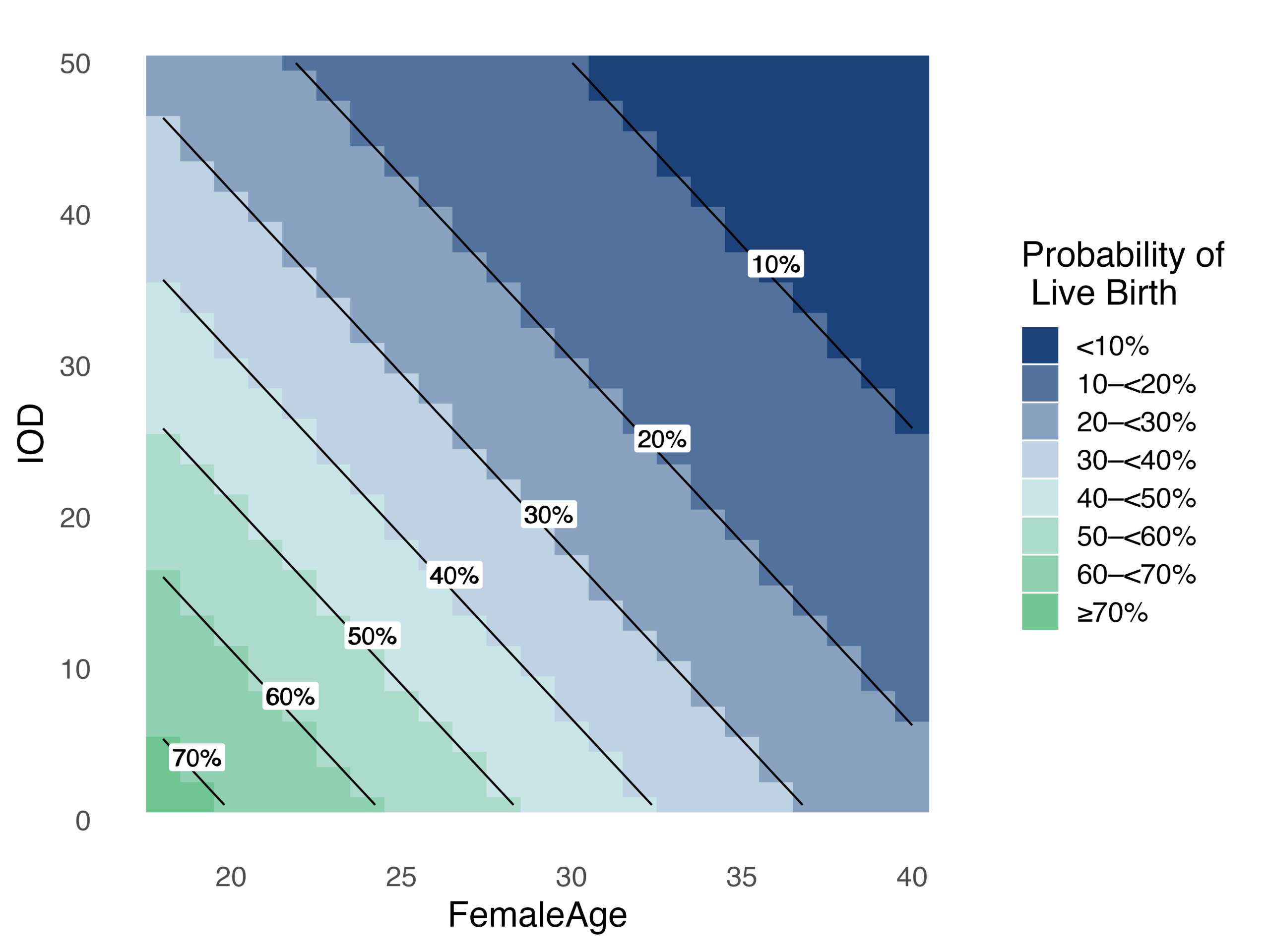
This matrix illustrates how the probability of live birth changes based on the combination of Sperm DNA damage (IOD) and female age. Younger patients with low DNA damage show the highest likelihood of success. Increasing age and/or DNA damage significantly reduce predicted outcomes.
Summary
This research positions double-stranded sperm DNA fragmentation as a clinically relevant biomarker in IVF, supporting a more personalised and data-driven approach to fertility care.